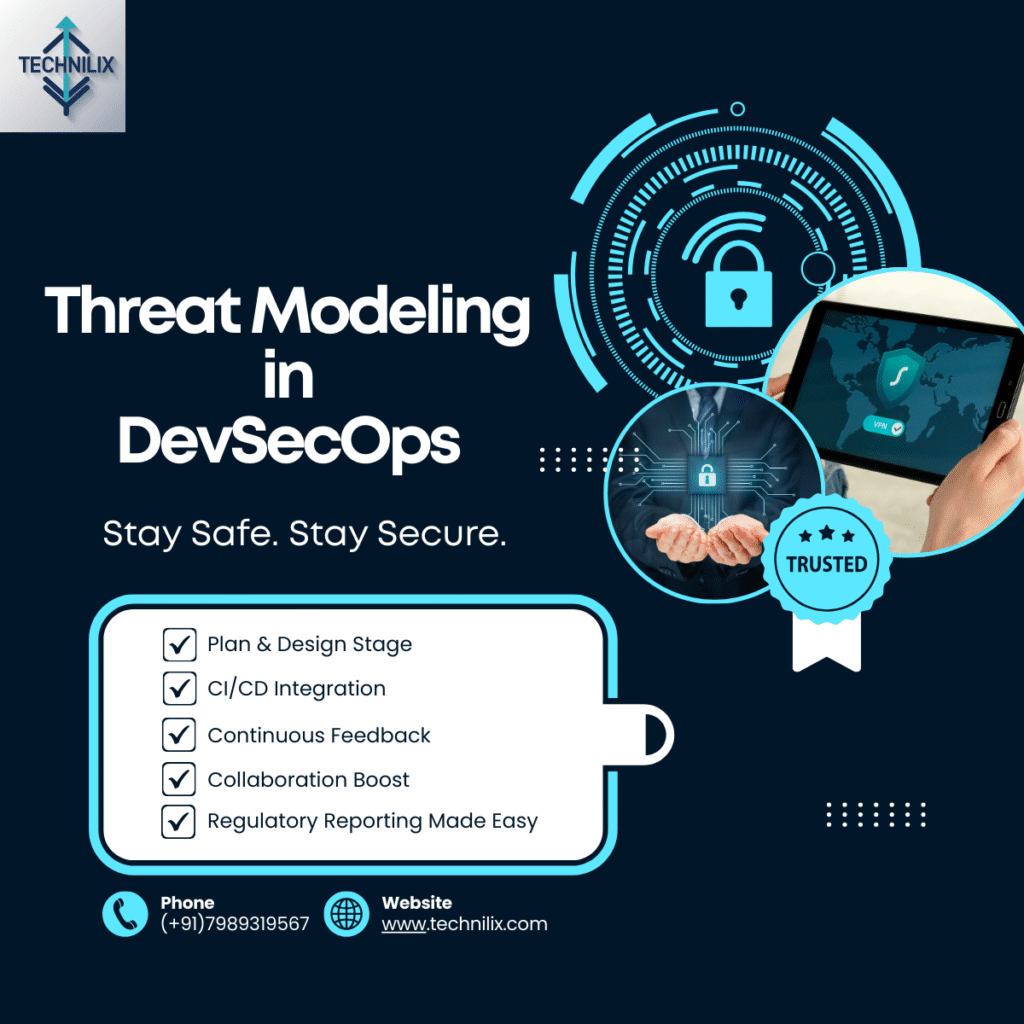
Threat Modeling in DevSecOps: Securing Applications Before They’re Built
In DevSecOps, speed is everything—but so is security. That’s why Threat Modeling is a critical step. Instead of waiting until after deployment to fix vulnerabilities, threat modeling helps teams predict, prevent, and prioritize risks right from the design phase.
What is Threat Modeling?
It’s a structured approach to identifying possible threats, attack vectors, and security weaknesses in an application, system, or process—before they can be exploited.
How It Fits Into DevSecOps
- Plan & Design Stage → Map out possible attack surfaces.
- CI/CD Integration → Automate checks for misconfigurations & insecure design patterns.
- Continuous Feedback → Update models as systems evolve.
- Collaboration Boost → Brings Dev, Sec, and Ops together with a shared security mindset.
Key Benefits
- Detects security flaws early → cheaper & faster to fix.
- Strengthens compliance with standards like OWASP, NIST, ISO.
- Improves risk awareness & decision-making across teams.
- Enables “secure by design” software development.
Popular Threat Modeling Frameworks
- STRIDE – Spoofing, Tampering, Repudiation, Information Disclosure, Denial of Service, Elevation of Privilege.
- DREAD – Damage, Reproducibility, Exploitability, Affected Users, Discoverability.
- PASTA – Process for Attack Simulation & Threat Analysis.
When DevSecOps teams integrate threat modeling into their pipelines, they don’t just build faster—they build smarter and safer.
Join Realtime Program with hands-on Business client projects 📞 Call Now💬 WhatsApp🌐 Contact Us
Regards, Technilix.com
Division of MFH IT Solutions (GST ID: 37ABWFM7509H1ZL)
☎️ Contact Us | LinkedIn
#Technilix #DevSecOps #ThreatModeling #AppSec #CyberSecurity #ShiftLeft #CloudSecurity #ZeroTrust