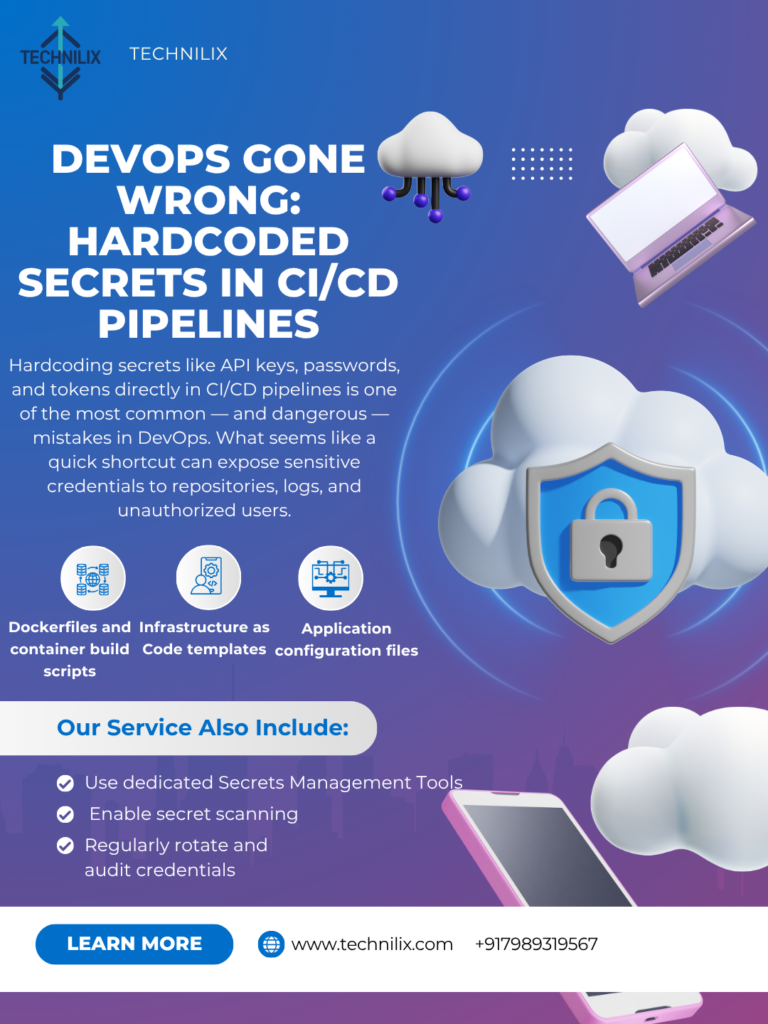
In many DevOps environments, teams move fast to automate builds and deployments. But sometimes, in the rush to ship faster, sensitive credentials such as API keys, database passwords, SSH keys, and cloud access tokens end up directly written inside CI/CD pipeline scripts or configuration files.
This practice may seem convenient during development, but it creates a serious security risk. Once secrets are stored in source code or pipeline files, they can be exposed through version control history, logs, shared repositories, or even accidentally pushed to public repositories.
Why This Is Dangerous
Hardcoded secrets can easily be discovered by attackers using automated scanning tools that search public repositories for exposed credentials. If attackers gain access to these secrets, they may be able to:
• Access cloud infrastructure and deploy malicious workloads
• Steal or modify sensitive data
• Interrupt production services
• Escalate privileges inside your environment
Even if the secret is removed later, it may still exist in the repository’s commit history, making the risk long-lasting.
Common Places Where Secrets Are Hardcoded
• CI/CD pipeline scripts (Jenkinsfile, GitHub Actions YAML, GitLab CI files)
• Dockerfiles and container build scripts
• Infrastructure as Code templates
• Application configuration files
• Environment variables committed to source control
Security should not be an afterthought in DevOps. Integrating security checks directly into CI/CD pipelines ensures that secrets are protected while maintaining the speed and efficiency DevOps promises.
A secure pipeline isn’t just about automation—it’s about building trust into every deployment.
Join Realtime Program with handson to Business client projects. hashtag#Call on +917989319567 / whatsapp on https://wa.link/ntfq3m
—————————–
Regards,
Technilix.com
Division of MFH IT Solutions (GST ID: 37ABWFM7509H1ZL)
☎️ Contact Us https://lnkd.in/gEfhFidB
LinkedIn https://lnkd.in/ei75Ht8e
#MFH #DevOps #DevSecOps #CICD #SecretsManagement #CloudSecurity #CyberSecurity #SecureDevOps #InfrastructureAsCode #CloudNative #TechSecurity